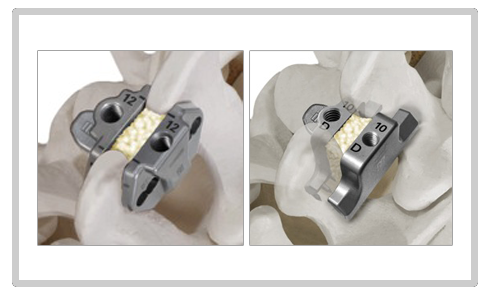
MACON, Ga.–(BUSINESS WIRE)–Southern Spine, LLC, an ISO 13485:2003 certified manufacturer of implants and instruments for spinal surgery, announced today the release of a current literature review on the “Clinical and Biomechanical Advantages of Interspinous Process Fixation.” This in-depth review covers the use of interspinous process fixation devices such as their StabiLink®MIS Interlaminar Spinal Fixation System that offer the benefits of fewer intraoperative complications, quicker recovery times and lower adjacent segment disease while providing comparable rigidity, fusions rates and patient-reported outcomes when compared to pedicle screw fixation.
Southern Spine is making this 10-page publication available to anyone who would like a copy. Please email your request to Southern Spine at info@southernspine.net and state that you would like either an electronic or hard copy of this comprehensive literature review and bibliography sent to your attention.
“We have confidence that our latest designs of the Dual Lamina and eZ Lamina StabiLink® Systems with our Laminar-LockTMtechnology offer surgeons and patients one of the best clinical choices for treating their pain and instability without limiting any of their future options,” stated David Field, CEO of Southern Spine. “We believe that choosing an Interspinous Process Fixation device is the best first option for many patients and that our StabiLink® MIS System is the ultimate interlaminar fixation system available.”
The StabiLink® MIS Spinal Fixation System is FDA Cleared and CE Marked and has been successfully usedin thousands of clinical procedures. You can get a “Hands On” demonstration of the innovative StabiLink® MIS System at the upcoming 2017 North American Spine Society (NASS) in Orlando, FL, October 25-27 at Booth #229.
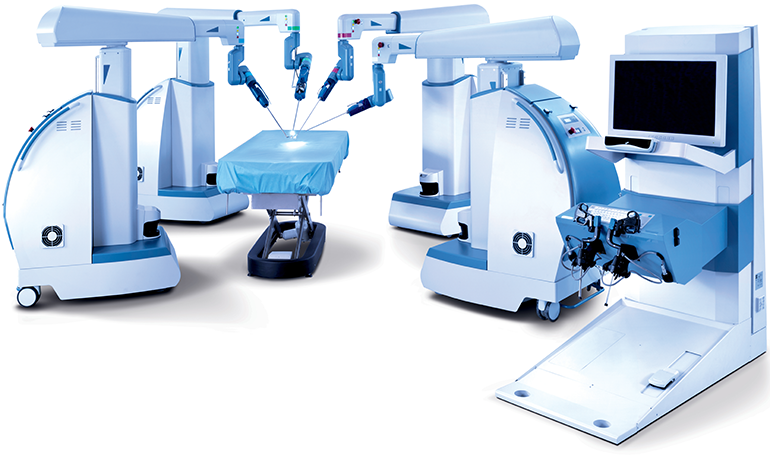
RESEARCH TRIANGLE PARK, N.C.–(BUSINESS WIRE)–TransEnterix, Inc. (NYSE American: TRXC), a medical device company that is pioneering the use of robotics to improve minimally invasive surgery, today announced the Company has received FDA 510(k) clearance for the Senhance™ Surgical Robotic System.
“The clearance of the Senhance System in the US is a milestone in the progress of robotics and is expected to deliver improvement in the efficacy, value and choices offered to patients, surgeons and hospitals,” said Todd M. Pope, President and Chief Executive Officer of TransEnterix. “Millions of surgical procedures in the US are performed each year laparoscopically with basic manual tools that limit surgeons’ capability, comfort and control. New choices are needed that enhance the senses, control and comfort of the surgeon, minimize the invasiveness of surgery for the patient, and maximize value for the hospital. Senhance is this new choice.”
With this clearance, the Senhance becomes the first new market entrant into the field of abdominal surgical robotics since 2000. Using the system, a surgeon directs small surgical instruments and a camera with precise movements and comfort. The system builds on the foundation of laparoscopy and features the security of haptic feedback and eye-sensing camera control for the first time in a robotic surgery platform. Additionally, the Senhance utilizes an open architecture, which allows hospitals and surgeons to leverage existing technology investments within the operating room ecosystem. The system is specifically engineered to manage operative costs effectively, making robotic surgery cost-effective on a per-procedure basis through the use of fully reusable instruments.
“Surgeons are approaching the boundaries of minimally invasive care performed with handheld manual instruments and cameras, and are seeking new technologies that will allow us to advance beyond these boundaries,” said Dr. Steve Eubanks, a general surgeon and Executive Director of Academic Surgery at Florida Hospital. “The future will be driven by the appropriate use of robotics and information tools in the operating room. The Senhance platform grants laparoscopic surgeons robotic precision, control of our vision, and haptic feedback while minimizing procedural costs, and is a welcome revolution in our field.”
TransEnterix will host a conference call on Tuesday, October 17, 2017 at 8:00 AM ET to discuss the FDA clearance of the Senhance. To listen to the conference call on your telephone, please dial (844) 804-5261 for domestic callers or (612) 979-9885 for international callers, reference conference code 1546349. To access the live audio webcast or archived recording, use the following link http://ir.transenterix.com/events.cfm. The replay will be available on the Company’s website.
About TransEnterix
TransEnterix is a medical device company that is pioneering the use of robotics to improve minimally invasive surgery by addressing the clinical and economic challenges associated with current laparoscopic and robotic options. The Company is focused on the commercialization of the Senhance™ Surgical Robotic System, a multi-port robotic system that brings the advantages of robotic surgery to patients while enabling surgeons with innovative technology such as haptic feedback and eye sensing camera control. The Company also developed the SurgiBot™ System, a single-port, robotically enhanced laparoscopic surgical platform. The Senhance Surgical Robotic System has received FDA 510(k) clearance and has been granted a CE Mark. For more information, visit the TransEnterix website at www.transenterix.com.
Forward-Looking Statements
This press release includes statements relating to the Senhance™ Surgical Robotic System and our current regulatory and commercialization plans for this product. These statements and other statements regarding our future plans and goals constitute “forward looking statements” within the meaning of Section 27A of the Securities Act of 1933 and Section 21E of the Securities Exchange Act of 1934, and are intended to qualify for the safe harbor from liability established by the Private Securities Litigation Reform Act of 1995. Such statements are subject to risks and uncertainties that are often difficult to predict, are beyond our control and which may cause results to differ materially from expectations and include whether the Senhance Surgical Robot will deliver improvement in the efficacy, value and choices offered to patients, surgeons and hospitals, whether the Senhance System will maximize value for hospitals and whether the Senhance platform grants laparoscopic surgeons robotic precision, control of surgeon’s vision and haptic feedback while minimizing procedural costs. For a discussion of the risks and uncertainties associated with TransEnterix’s business, please review our filings with the Securities and Exchange Commission (SEC), including our Annual Report on Form 10-K filed on March 7, 2017 and our other filings we make with the SEC. You are cautioned not to place undue reliance on these forward looking statements, which are based on our expectations as of the date of this press release and speak only as of the origination date of this press release. We undertake no obligation to publicly update or revise any forward-looking statement, whether as a result of new information, future events or otherwise.
MAHWAH, N.J., Oct. 16, 2017 /PRNewswire/ — Stryker’s Joint Replacement division today announced that its cementless Mako Total Knee with Triathlon Tritanium has received 510(k) market clearance by the U.S. Food and Drug Administration.
Triathlon Tritanium combines the kinematics of Stryker’s market leading Triathlon knee implant with the latest in highly porous biologic fixation technology for a knee system like no other. The innovation of Tritanium’s tibial baseplate and metal-backed patella components are enabled by Stryker’s proprietary AMagine additive manufacturing technology and are SOMA-designed.
With cementless procedures rising in popularity and becoming a fast-growing trend1, Mako Total Knee with Triathlon Tritanium expands the current robotics offering to provide a cementless solution for orthopaedic surgeons seeking a more predictable surgical experience combined with increased operating room efficiency, biologic fixation and an alternative to bone cement.
“With the rise in demand for cementless knee technology, we believe this new offering can have a positive impact on procedural efficiency and patient outcomes,” said Stuart Simpson, President, Stryker’s Joint Replacement division. “We’re excited to continue to lead in robotic technology and combine two of our most advanced and differentiated products to provide surgeons with the ability to transform orthopaedic surgery.”
About Stryker
Stryker is one of the world’s leading medical technology companies and, together with its customers, is driven to make healthcare better. The company offers innovative products and services in Orthopaedics, Medical and Surgical, and Neurotechnology and Spine that help improve patient and hospital outcomes. More information is available at www.stryker.com.
References:
1.
Table 54: Primary TKA Implant Market. US Markets for Large-Joint Reconstructive Implants 2013. Millennium Research Group. March 2013. Pg. 84
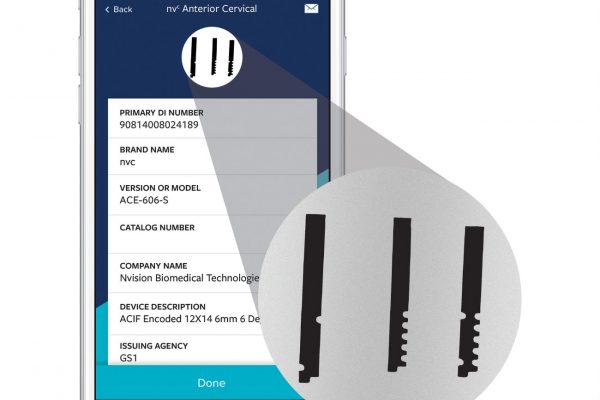
Zeshan Hyder, DO, of Bone & Joint Specialists in Merrillville, Ind.; Frank K. Kuwamura, III, MD, of Innovative Spine in San Antonio, Texas; and Larry M. Kjeldgaard, DO, of Cervical Spine Specialist in Fort Worth, Texas are the first surgeons to implant medical devices from Nvision Biomedical Technologies with Structural Encoding® technology. The Structural Encoding technology advances patient care by providing permanent marking embedded within the device that is accessible through an x-ray image.
“We are always looking for the best technologies available to improve the results for our patients and get them back to their productive and pain-free activity as quickly as possible. Having a clear knowledge of their history helps us create the best plan of care. Structural encoding provides transparency for surgeons and patients that creates a new level of knowledge from patient research to implant integrity, all of which equals better patient care,” said Dr. Hyder.
Dr. Kuwamura agrees, “As surgeons, we take care to understand our patients’ lifestyles and activity level. The more knowledge we have, the better decisions we can make for their care. Patients move, physicians retire, and when we see patients that have had previous procedures with other surgeons, it can be almost impossible to get their records. We spend significant time trying to track that information down, but sometimes we don’t know what has previously been implanted until we are in surgery. Structural Encoding changes all of that. We now have a way to know everything about a device and previous surgeries simply by taking an x-ray.”
Structural Encoding, a patented technology platform developed by Watershed Idea Foundry, is the industry’s most innovative solution for medical device identification with permanent direct part marking. Manufacturers can license the technology for use in their medical devices to meet the U.S. Food and Drug Administration’s (FDA) regulation around permanent marking of the device itself, called Unique Device Identification (UDI). Nvision Biomedical Technologies, a San Antonio-based medical device and biologics manufacturer, is the first company to launch devices with the Structural Encoding technology.
“We work with our patients to determine the best outcomes for getting them back to their quality of life and sometimes that means surgery,” said Dr. Kjeldgaard. “If we do determine surgery is the best course of action, the knowledge we have and the more information we can provide our patients, the better. Structural Encoding gives us an advantage in patient care and gives the patient peace of mind for a lifetime.”
Nvision initially launched three devices in the nv line with Structural Encoding. nv(c)® is an anterior cervical interbody fusion system; nv(p)® is a posterior lumbar interbody fusion system; and nv(a)® is an anterior lumbar interbody fusion system. The initial surgeries were anterior cervical discectomy with fusion at one and two levels, with a structurally encoded nv(c) PEEK interbody implant.
“The entire medical device industry is looking to provide UDI compliant devices, but none are as seamless or as user-friendly as those with Structural Encoding,” said Dr. Hyder. “Structural Encoding is self-contained and doesn’t cause any extra steps or paperwork for the surgeon or the hospital, and that alone is good for our patients.”
About Nvision Biomedical Technologies
Nvision is a San Antonio-based medical device and biologics manufacturing company focused on providing surgeons implants that are paired with instrumentation and biologics to simplify and improve surgery procedures that help patients get back to their quality of life.
Nvision is committed to developing and manufacturing thoughtfully designed products combined with exceptional service that keep the patients, surgeons, healthcare providers and distribution partners in mind. Nvision is aligned with surgeon thought leaders, key researchers, and development engineers from prestigious institutions to design, test, and bring to market the most innovative concepts.
About Dr. Zeshan Hyder
Dr. Zeshan Hyder is partner with Bone & Joint Specialists in Merrillville, Ind. He is a board-certified orthopedic surgeon, who has been voted Best of the Region for Spine Care by The Times for three straight years.
He graduated Cum Laude from the University of Illinois and throughout his medical education has published articles on various subjects related to arthroplasty and spinal surgery. During his fellowship and residency programs he gained valuable expertise in sports medicine, orthopedics and trauma as well as conservative and surgical management of all orthopedic spinal disorders.
About Dr. Frank Kuwamura
Dr. Frank K. Kuwamura, the founder and chief surgeon at Innovative Spine in San Antonio, Texas, is a board-certified orthopedic surgeon who specializes in emerging technology for spinal care.
A graduate of Boston University Medical School, Kuwamura completed his internship in general surgery and residency in orthopedic surgery at the National Naval Medical Center in Bethesda, Maryland where he earned the rank of Commander in the 3rd Marine Division. He is a member of the American Academy of Orthopedic Surgeons and the Bexar County Medical Society. He has held the title of Diplomat of the National Board of Medical Examiners and served on the American Board of Orthopedic Surgeons, Board Certification.
About Dr. Larry Kjeldgaard
Dr. Larry M. Kjeldgaard, founder and owner of Cervical Spine Center in Fort Worth and Hurst, Texas is a board-certified orthopedic surgeon who specializes in the treatment of the spine, neck and back.
A graduate from the Philadelphia College of Osteopathic Medicine, Dr. Kjeldgaard completed his residency at the Community General Osteopathic Hospital in Harrisburg, PA, and his orthopedic surgery residency training in Pontiac, Michigan. He’s a member of American Osteopathic Board of Orthopedic Surgeons, American Medical Association, the American Osteopathic Academy of Orthopedics and Texas Osteopathic Medical Association.
Dublin, Ireland – 11 October 2017 –Today, DePuy Synthes, part of the Johnson & Johnson Family of Companies, unveiled the VIPER PRIME™ System, an innovative Minimally Invasive Surgery (MIS) pedicle screw designed to simplify MIS spinal fusion surgery. VIPER PRIME reduces the number of instruments needed, the number of instrument passes and the number of steps required to insert a percutaneous screw utilizing a minimally invasive technique. The product was shown for the first time during this week’s EUROSPINE 2017 congress taking place in Dublin, Ireland.
Minimally invasive spinal fusion surgery is gaining popularity thanks to evidence that it may help improve outcomes when performing surgery through a smaller skin incision, which leads to less trauma to surrounding soft tissue, reduced blood loss during operation, and potentially a faster recovery for patients(3,4). However, as MIS fusion becomes more common, there is a need to simplify these procedures and overcome clinical challenges associated with the current technology.
By combining all the pedicle preparation instruments into one single tool, the VIPER PRIME System eliminates the need for guidewires, Jamshidi needles and additional pedicle preparation instruments. In one bench study, the VIPER PRIME System demonstrated a 33 percent reduction in the time required to insert a pedicle screw compared to traditional MIS techniques(2).
“I find the VIPER PRIME System easy and straightforward and I look forward to using it again for my future spinal fusion cases,” said Dr Kavakebi, an early user of the system from University Hospital Innsbruck, Austria.
Dr. Bordon from Hospital Manises, Valencia, Spain, who conducted the first surgery with the system in Europe concludes, “My OR team were very positive about the ease of assembly and the low footprint of the new system, that led to a more organized operating room.”
The VIPER PRIME System requires only two instrument trays, which may result in a more organized back table with fewer instruments, enhancing surgical workflow. The streamlined instrument set means a smaller procedural footprint that can also help reduce waste and processing costs.
“As a leader in pedicle screw technology, we have a responsibility to continue to innovate ways to make spinal fusion surgery less invasive for patients and less complicated for surgeons,” said Nadav Tomer, Global Platform Leader, DePuy Synthes Spine.
“The VIPER® System has more than ten years of clinical heritage and this introduction of VIPER PRIME is our latest example of how we are providing differentiated technologies that simplify spine surgery, making it more reproducible for every surgeon while improving patient outcomes,” concluded Jordy Winters, DePuy Synthes Spine EMEA Lead.
About DePuy Synthes Companies
DePuy Synthes, part of the Johnson & Johnson Medical Devices Companies, provides one of the most comprehensive orthopaedics portfolios in the world. DePuy Synthes solutions, in specialties including joint reconstruction, trauma, craniomaxillofacial, spinal surgery and sports medicine, are designed to advance patient care while delivering clinical and economic value to health care systems worldwide. For more information, visit www.depuysynthes.com .
Notes to editors
The VIPER PRIME System is currently being introduced to health care professionals in the Europe, Middle East and Africa (EMEA) region during educational and industry events. Full EMEA commercial availability of this tool is expected in early 2018.
The third-party trademarks used herein are the trademarks of their respective owners.
Registered Office: Johnson & Johnson Medical Limited, PO BOX 1988, Simpson Parkway, Livingston, West Lothian, EH54 0AB, United Kingdom. Incorporated and registered in Scotland under company number SC132162
Internal data on file: ADAPTIV test report 103327910. Note: Bench tests results may not necessarily be indicative of clinical performance.
Jhala, Amit, et al. Minimally invasive transforaminal lumbar interbody fusion. Indian Journal of Orthopaedics 48(6) (2014 Nov-Dec); 562-567
Peng, Chan Weam Benedict, et al. Clinical and Radiological Outcomes of Minimally Invasive Versus Open Transforaminal Lumbar Interbody Fusion. SPINE Vol. 34, Number 13 (2009); 1385-1389.
CAESAREA, Israel–(BUSINESS WIRE)–Mazor Robotics Ltd. (TASE: MZOR; NASDAQGM: MZOR), a pioneer and a leader in the field of surgical robotic guidance systems, announced the appointment of Ron A. Tavlin as Vice President, Business Development. In this newly created role, Mr. Tavlin will report directly to Ori Hadomi, Mazor’s Chief Executive Officer.
“Last year, we began an effort to expand the use of Mazor’s core proprietary technology beyond our current indications to further develop our business with the focus on continued growth and innovation. This effort has progressed to the point where a proven business development leader will move our initiatives forward and maximize our opportunities to heal through innovation. Ron Tavlin brings to Mazor an impressive business development track record. He will lead the implementation of our strategies to develop Mazor’s business beyond our current spine focus as we pursue our goal of being the leader in image based medical robotics,” commented Mr. Hadomi.
Mr. Tavlin has more than 25 years of experience with public and private companies. Prior to joining Mazor, he was a consultant supporting the Medtronic Ventures and Corporate Development teams, with an emphasis on supporting the business development activities in Europe, Middle East and Africa (EMEA) and AsiaPacific (APAC). Prior to Medtronic, he was the Chief Operating Officer of BlueWind Medical, and the Co-founder and Managing Partner of Omega Capital, a private equity fund focused on early stage, middle market, and turnaround opportunities, including medical devices. Mr. Tavlin received a Bachelor of Science in Electrical Engineering from the City University of New York, and a Masters of Business Administration degree from Stern School of Business New York University.
About Mazor
Mazor Robotics (TASE: MZOR; NASDAQGM: MZOR) believes in healing through innovation by developing and introducing revolutionary robotic technologies and products aimed at redefining the gold standard of quality care. Mazor Robotics Guidance Systems enable surgeons to conduct spine and brain procedures in a precise manner. For more information, please visit http://www.MazorRobotics.com.
Forward-Looking Statements
This press release contains forward-looking statements within the meaning of the Private Securities Litigation Reform Act of 1995 and other securities laws. Any statements in this release about future expectations, plans or prospects for the Company, including without limitation, statements regarding the benefits of Mr. Tavlin’s appointment, and other statements containing the words “believes,” “anticipates,” “plans,” “expects,” “will” and similar expressions are forward-looking statements. These statements are only predictions based on Mazor’s current expectations and projections about future events. There are important factors that could cause Mazor’s actual results, level of activity, performance or achievements to differ materially from the results, level of activity, performance or achievements expressed or implied by the forward-looking statements. Those factors include, but are not limited to, the impact of general economic conditions, competitive products, product demand and market acceptance risks, reliance on key strategic alliances, fluctuations in operating results, and other factors indicated in Mazor’s filings with the Securities and Exchange Commission (SEC) including those discussed under the heading “Risk Factors” in Mazor’s annual report on Form 20-F filed with the SEC on May 1, 2017 and in subsequent filings with the SEC. For more details, refer to Mazor’s SEC filings. Mazor undertakes no obligation to update forward-looking statements to reflect subsequent occurring events or circumstances, or to changes in our expectations, except as may be required by law.
I have seen a lot of tenured ortho sales people leave the comfort of “Big Ortho” and take on the role of Distributor or rep for much smaller start-ups. I want to deconstruct the forces driving this change and the dynamics between all the players. Then, we will explore what drives the variability in results of this new model. Finally, I will leave you with some ideas on how you can become a high caliber distributor prepared to thrive in a new role.
Big Ortho vs The Rep
As pricing pressures continue to push profits down, manufacturers are looking for more ways to improve their bottom line. As referenced in my previous article The Unsung Hero of the Orthopedic Industry – The Rep, the distributors and reps bear the brunt of much of the pricing compression. It seems as though the easy target for the squeezing is the one furthest from the boardroom – the Sales Reps and Distributors.
We have seen large companies’ commission rates fall well below 20%. At the same time, ASP’s (Average Selling Prices) continue to fall with corporate negotiated hospital or GPO contracts. The result is an inverse relationship where reps have to do more cases to make the same amount of money as last year. Increasing business 20-30% is a more difficult challenge than ever before due to increased consolidation and competition in the marketplace.
We are left with a dynamic where Small Ortho can capitalize on the inverse relationship Big Ortho reps face. By offering significantly higher commission and the ability to be their own boss, small ortho is attracting experienced representation that can leverage established relationships and navigate familiar approval processes.
“The days of only courting your surgeons and hospitals is passing away along with paper-only records and whiteboard logistics.The Ortho Startup & The Rep”
The orthopedic start up market continues to attract venture and private equity funding as forecasts like, “OrthoBiologics market to reach $6.06B by 2022” present fertile ground. Additionally, as Big Ortho seems more comfortable investing in M&A rather than R&D, start-ups have a clear exit strategy.
As the device market matures and patents expire, new doors open for clever copycats. This phenomenon presents opportunity for smaller, more nimble competitors to gain a strategic advantage and capture business that was once securely owned by Big Ortho. Innovative technology or even just novel improvements to antiquated systems can lead to profitable acquisitions.
This is not to say it is an easy endeavor for start-ups to break into orthopedic implants. R&D, Regulatory affairs, and the rapidly evolving landscapes of hospitals and GPO requirements present evermore complex and time-consuming barriers for small companies. As with any new venture, more time translates into more money and that unknown timeline can be very detrimental to a small company. Finding representatives and distributors capable of steering through this “mine field” is a critical driver of their success.
The Challenge
The challenge for many smaller orthopedic companies is that the caliber of distributor that they are able to attract tend to be limited to a Sales Rep who decided to bail out of a larger company for the reasons described above. They require very little support or training and they can hit the ground running to achieve some success fairly quickly. But, for what these reps bring in strong relationships and technical know-how, they often lack in infrastructure and leadership experience. As a result, what the company ends up with is little more than what we call a “Super Rep” who’s sales plateau sooner than expected.
The reason most plateau quickly is that they don’t have any of the infrastructure that a seasoned distributor typically does. No one can blame them since they are essentially a rep who now enjoys the full distributor commission rather than a split. Rather than owning a business, they effectively only own a job and want to keep overhead low and profits high. This is a short-sighted solution and the distributors who are in this category are quite vulnerable. Without a team and support infrastructure, they are little more than the sum value of the surgeon relationships.
For the manufacturer, this poses a problem of scalability. If these Super Reps don’t begin to take on the responsibilities of a true distributor or agent, they will struggle to capture more geography and build a valuable and sustainable business. While it may satisfy some, manufacturers don’t see these players as long-term partners. The success of Big Ortho came from having strong, long-term partnerships with distributors and agents who invested in their businesses and built sustainable enterprises that were able to scale.
Where many of these new distributors are failing is in building a foundation of scalability and making the necessary investments into their company’s future sustainability. Setting the right foundation for success early in the scaling process is paramount. It’s not necessary to make large capital investments, but setting up the right foundation is paramount to prolonged success.
“As margins continue to tighten, operational efficiencies achieved through smarter distribution and sales will separate winners from losers.”
Data-driven Distribution
Where does one start? First, start with the basics: as a distributor, you need to have a legitimate company website if you want to be seen and prospected by companies looking for new distributors. You and I both know the surgeons and hospitals don’t give much thought to that. But, if you’re successful, M&A will eventually impact the lines you carry. Continually prospecting and being visible to companies with new technologies is a key part of remaining relevant and positioning yourself for success in your local market. Having a website enables you to project the image that you take your business seriously and are taking steps to be professional. Manufacturers want to see that you work ON your business and not merely in it.
Having a website also enables you to use an email address with your company’s name on it rather than a gmail, or worse: your AOL address. Nothing says “mom & pop” like a distributor using a internet service provider’s email address. The quality of your website is also important as it projects the image of your company. If it is too “1990’s,” people will draw the conclusion that you are still back in the dark ages and not availing yourself of the latest technologies. This can be an impediment to attracting some of the companies with newer innovations that are seeking representation. A website can be done very inexpensively and deliver the right message and image.
Another inexpensive way to differentiate your distributorship is by leveraging technology to manage your business. Using a whiteboard, Google Calendar and group text messages to manage inventory presents you as a risky proposition when it comes to companies allocating valuable assets to you. As margins continue to tighten, operational efficiencies achieved through smarter distribution and sales will separate winners from losers. Technology should impact your business in several ways: coordinate your team’s schedules, quickly schedule cases, manage day to day sales activities, track your inventory from multiple manufacturers, consolidate your manufacturer’s invoices and open PO’s. In other words, run your business in the 21st century.
While I am biased in believing our platform, Surg.io, is the best solution for reps and distributors, any electronic system is better than none. Keep in mind that manufacturers entrust a great deal of money into your hands by way of implant and instrument inventories. Your existing and future partners want to see that your utilization brings about a healthy return on investment. Nothing is more compelling than efficient infrastructure and solid data to support your request for additional inventory or even, data to support keeping the inventory you currently have. Equally, nothing more undermines your partnership with a manufacturer than inefficient use and tracking of their inventory.
Implementing one of these platforms doesn’t need to be onerous. While there is always a bit of a learning curve when starting up, once you get through the on-boarding process and everyone is using it, it will be a lifesaver. In addition to better organization and inventory utilization, using Surg.io, or a similar platform, helps you create margin in your day for more selling by streamlining all your processes. It enables you to better communicate as well as ensure that everyone is singing from the same sheet of music. If all you’re using is Google Calendar, you’re missing a whole host of features and analytics that can take your business to the next level.
Looking Ahead
As challenges continue to mount and the odds continue to stack against orthopedic distributors, only those who embrace technology and figure out how to leverage it will be able to thrive through the next 10 years of the evolution of the industry. Doing more with less will continue to be the pressure and will require a strategic approach to supply chain management. Projecting a “no tech” business to manufacturers poses a profound risk to distributors and with how easy and inexpensive as it is, seems to be a very risky proposition. The days of only courting your surgeons and hospitals is passing away along with paper-only records and whiteboard logistics.
To learn more about Surg.io and how to leverage it for growth and scalability, visit www.Surg.io and request a demo.
CHICAGO–(BUSINESS WIRE)–Orthopedics leader Medacta International today announced the introduction of the MiniMAX Hip System into its U.S. product portfolio. The MiniMAX is an anatomical cementless stem that is engineered to provide enhanced fit and fill in the metaphyseal femur by following the natural shape of the femoral canal with a unique curved design, ideal for both minimally invasive anterior and posterior hip replacement procedures. The launch follows the successful first stateside surgery utilizing the stem, which was performed by David Scott, M.D., of Spokane, Washington, on September 12.
“The MiniMAX Hip Stem is a very versatile product. It was built as an addition to the product range of stems and instruments dedicated to our AMIS (Anterior Minimally Invasive Surgical) approach to hip replacement, but it also works with posterior techniques, providing surgeons with even more flexibility,” said Francesco Siccardi, Executive Vice President of Medacta International. “Our partners in Europe and Australia have had extremely positive experiences with the implant, and we’re excited to offer it as another option for surgeons in the United States.”
The MiniMAX Hip Stem aims to reduce risk and postoperative pain for patients while making it easier for surgeons to introduce it into the femur. The MiniMAX’s lateral flare design minimizes fracture, and its nine degrees of neck anteversion can provide more joint stability and reduce the risk of dislocation. The short, thin tip with five degrees of curvature lowers the risk of thigh pain caused by distal interference. The implant’s proximal titanium plasma spray and hydroxyapatite coating provide enhanced proximal fixation.
“I was impressed with how well the MiniMAX Hip Stem replicates the natural anatomy of the human hip, rather than having the patient’s anatomy conform to the shape of the implant, like many other popular models,” said Dr. Scott. “Pairing the MiniMAX with a minimally invasive approach made for an efficient, effective procedure and my patient is recovering well.”
First introduced in Europe in 2007, the MiniMAX Hip Stem is associated with proven clinical results, obtaining a survival rate at 5 years of 97.5 percent considering revision for any reason and 100 percent considering aseptic loosening as endpoint, according to internal Medacta research.
John Masonis, M.D., of Charlotte, North Carolina, will perform a live surgery using Medacta’s AMIS platform to implant the MiniMAX Hip Stem at the 6th Annual ICJR Anterior Approach Hip Course on Thursday, Oct. 19 at noon Central.
“Surgeons attending the live surgery will receive education on the surgical and patient processes associated with the anterior approach to hip replacement and while doing so, will be able to see the MiniMAX stem and AMIS platform in clinical practice for themselves,” said Dr. Masonis.
Medacta® International is a world leading manufacturer of orthopedic implants, neurosurgical systems, and instrumentation. Medacta’s revolutionary approach and responsible innovation have resulted in standard of care breakthroughs in hip replacement with the AMIS®system and total knee replacement with MyKnee® patient matched technology. Over the last 10 years, Medacta has grown dramatically by taking a different approach and placing value on all aspects of the care experience from design to training to sustainability. Medacta is headquartered in Castel San Pietro, Switzerland, and operates in over 30 countries. To learn more about Medacta International, please visit www.medacta.com or follow @Medacta on Twitter.
Contacts
For Medacta International, Inc.
Jill Bongiorni, 516-729-2250 Jill@torchcomllc.com
Oska Wellness, a health-tech, wearable pain relief device startup based out of Carlsbad, CA, is the 2017 Startup of the Year winner.
The announcement, made at the Innovate Celebrate conference held by TechCo in partnership with CTA, came following a three-day event attended by 100 startup semifinalists, and eventually narrowed down to five finalist startups today. Of all contestants at the wide-sweeping startup competition, Oska Wellness has officially risen to the top.
As the first-place winner, Oska Wellness will receive a prize package worth potentially $150,000 and from a list of companies including Start Co., 500 Startups, Techstars, Dreamit Ventures, Business Blocks, American Airlines, and Moo.
Oska Wellness Is the 2017 Startup of the Year
Oska Wellness designs a technology that can help areas of the body prone to injury and degeneration. You can listen to their final competition pitch below, and can watch the other four startup of the year finalists pitch here.
WEST CHESTER, Pa., Oct. 12, 2017 /PRNewswire/ — Today DePuy Synthes* announced the U.S. launch of the new TFNA Augmentation System, the first and only polymethylmethacrylate (PMMA) cement with specific trauma device indications, offered exclusively for use with the TFNA System. The TFNA Augmentation System is used to address the needs of patients with hip fractures and who have poor bone quality.
The TFNA Augmentation System can be used to provide enhanced implant fixation in cases where the potential risk of cut-out is significant. Cut-out is a loss of implant anchorage or stability in the bone, frequently occurring in those with poor bone quality. It causes the femoral neck-shaft angle to collapse, and is a leading clinical complication during hip fracture surgery. Cut-out can also lead to reoperation, which increases risks to the patient and increases costs to the healthcare system. Each year, more than 300,000 hip fractures occur in the U.S.1 These fractures are common in the elderly, especially those with osteoporotic bone. Fractures are expected to increase as the population ages.2 When used together with the TFNA System, the TFNA Augmentation System is designed to help reduce the risk of cut-out and provide enhanced implant fixation.3,4
“The TFNA Augmentation System addresses an important clinical need for patients who undergo hip fracture surgery, especially those who suffer from poor bone quality,” said Charisse Y. Sparks, MD, Franchise Medical Leader Trauma, DePuy Synthes Trauma. “This new system complements the TFNA System and has the potential to improve patient outcomes, reduce costs, and increase patient satisfaction.”
About DePuy Synthes
DePuy Synthes, part of the Johnson & Johnson Medical Devices Companies**, provides one of the most comprehensive orthopaedics portfolios in the world. DePuy Synthes solutions, in specialties including joint reconstruction, trauma, craniomaxillofacial, spinal surgery and sports medicine, are designed to advance patient care while delivering clinical and economic value to health care systems worldwide. For more information, visit www.depuysynthes.com.
Cautions Concerning Forward-Looking Statements
This press release contains “forward-looking statements” as defined in the Private Securities Litigation Reform Act of 1995 regarding the effectiveness and value of the TFNA Augmentation System. The reader is cautioned not to rely on these forward-looking statements. These statements are based on current expectations of future events. If underlying assumptions prove inaccurate or known or unknown risks or uncertainties materialize, actual results could vary materially from the expectations and projections of DePuy Synthes and/or Johnson & Johnson. Risks and uncertainties include, but are not limited to: uncertainty of commercial success; challenges to patents; competition, including technological advances, new products and patents attained by competitors; changes to applicable laws and regulations, including global health care reforms; changes in behavior and spending patterns or financial distress of purchasers of health care products and services; product efficacy or safety concerns resulting in product recalls or regulatory action; manufacturing difficulties and delays; and trends toward health care cost containment. A further list and descriptions of these risks, uncertainties and other factors can be found in Johnson & Johnson’s Annual Report on Form 10-K for the fiscal year ended January 1, 2017, including under “Item 1A. Risk Factors,” its most recently filed Quarterly Report on Form 10-Q, including under the caption “Cautionary Note Regarding Forward-Looking Statements,” and the company’s subsequent filings with the Securities and Exchange Commission. Copies of these filings are available online at www.sec.gov, www.jnj.com or on request from Johnson & Johnson. Neither DePuy Synthes nor Johnson & Johnson undertakes to update any forward-looking statement as a result of new information or future events or developments.
*DePuy Synthes represents the products and services of DePuy Synthes, Inc. and its subsidiaries.
**The Johnson & Johnson Medical Devices Companies comprise the surgery, orthopaedics, and cardiovascular businesses within Johnson & Johnson’s Medical Devices segment.
1 Agency for Healthcare Research and Quality. National and regional estimates on hospital use for all patients from the HCUP Nationwide Inpatient Sample (NIS). 2013.http://www.ahrq.gov/research/index.html. Accessed 12 October 2015.
2 Cummings SR. Rubin SM, Black D. The future of hip fractures in the United States. Numbers, costs and potential effect of postmenopausal estrogen. Clin Orthop Relat Res. 1990;252:163-166
3 DePuy Synthes test data on file, Windchill 0000268245.
4 Hofmann L, Zderic I, Hagen J, Agarwal Y, Scherrer S, Weber A, Altmann M, Windolf M, Gueorguiev B. Biomechanical effect of bone cement augmentation on the fixation strength of TFNA blades and screws. Presented at 22nd Congress of the European Society of Biomechanics. 10-13 July 106. Lyon, France.